Thursday, July 7, 2022

The Knifemaker is Big News!


It is always a joy to boast about my favoriate knifemaker but low and behold if this don't beat all!  There he is on the interstate billboards for the Craftsmen's Fair! The family news just gets bigger and bigger!
I hope you can visit the Fair - the number of handcrafted items is both remarkable and inspiring!


Tuesday, November 26, 2019

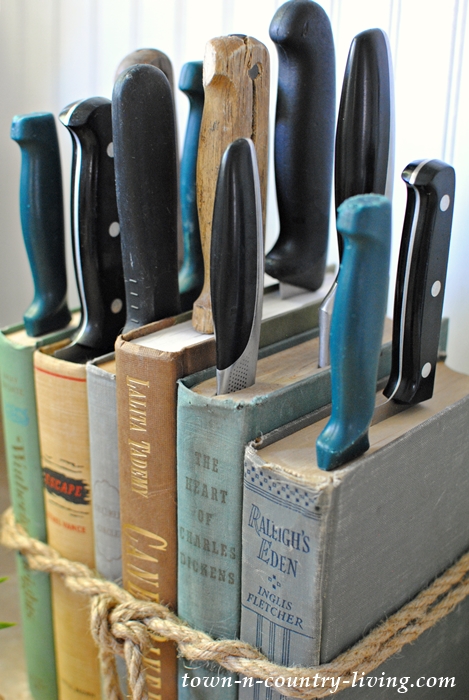
Combining books with knives?

Image result for book knife holder
Town and Country Living
Now that knives are understood, or at least better understood, what to do with the knowledge?  From an educational point of view, how can they be combined with books?  This knife holder came to my attention...for kitchen knives, old cookbooks or foodie books would be appropriate for cooking utensils but would about hardware or DIY books for garage knives?

Friday, July 29, 2016

Mohr Gratitude

The knifemaker's aunt owes her month of education to Mohr Custom Knives' knifemaker, knifemaker's dad, knifemaker's office manager, and shop dog extraordinaire, Riley. They made the learning easy, understandable, and productive!


Summing Up the Month

When the month began....
...when the month ended.
The month is coming to a close and the knifemaker's aunt is returning home. The learning, the living, and the loving of metalworking have been a dynamic educational experience. As demonstrated by her apron and name toggle, she learned the day-to-day work of how metal can be fired, hammered, ground, polished, and buffed into a gleaming knife blade or household product. With the process came the opportunity to re-visit how to set up an experiment when trying to investigate a new idea from an existing product: change only one variable at a time! Re-doing the experiment will have to wait for the next show coming up in the fall.

From the ashes of a rusted
railroad spike come the
gleaming finished knife.
 With fire and manual labor, and the dirt that accumulates, the knifemaker's aunt made final products to demonstrate the steps necessary to work metal into nail knives, hooks, and broaches. Life lessons learned were 1-  metalworking is a process that shapes the rhythm of working days, 2- metalworking brings with it the excitement of seeing a Phoenix rise from the ashes of filth, and 3- there is a constant activity to eliminate dirt. Just as folding clothes recurs every time clean clothes are produced, sweeping up metal dust recurs every time metal is forged, ground, or polished. One follows another. One is inevitable after the other. Once the rhythm is recognized, the days fall into a pattern and work doesn't seem like work anymore.

As for the day-to-day rhythm of seasonal visitors in a tourist area: the approach to scheduling work days should be approached as an annual pattern...work is every day until after the holidays when there is a 3-month break to catch a breath, take a break, and regroup for the next start of tourist season. In the teaching profession, this pattern is 3 months later with the break being during the summer months, not the winter.  During the school year, teachers are on an alert day in and day out until the end of the academic year.

Valuable lessons all.

Thursday, July 28, 2016

Scarf Broach

The knifemaker's aunt gave the scarf broach a good brushing with a brass brush. She was going to add gemstones for added color, but decided against it. The forged look of metal next to the cloth didn't need additional beauty!


Shop Hook Board

The regular nails, with the hook shape but no special design at the head, can be made into a coat or jacket boards for the shop. The knifemaker's aunt returned to the scrap pile of wood pieces left over from the ramp project. She changed the quote used for the shop stool and put it on a piece of wood: "The cutting edge of custom is a dynamic place. Leave your hang ups here." No gemstones, or special meanings other than the idea that no one brings a bunch of stuff into the shop where it can get in they way (physically, or maybe emotionally?).

There's nothing like lining up a bunch of forged nails to see the imperfections!


Kale Nails

The flattened, leaf-shaped forged nails are going to be kale leaves for a hanging board for the knifemaker's other aunt, the bold family member who has embraced the concept of a whole foods, plant-based diet. Her birthday is coming up soon, and what better than some kale nails!

Remember forging the kale end of the nail? It may have looked like a blob at first, the shape led the design in the end...a case of making lemonade from lemons. The knifemaker's aunt scrounged up a piece of scrap from the ramp project. She shaped it into a loose curve and added a quote to the board that addresses the WFPB lifestyle: "The cutting edge of Vegan is a place of green. Leave your hang ups here."  Adding to the metaphysical meaning are four gemstones that come together to symbolize life balance - citrine, amethyst, flourite, and snowflake obsidian.

What do the stones mean? Citrine is associated with the solar plexus - a person's core of life and health. Amethyst evokes balance, peace, and heightened intelligence (pretty handy when balancing life events). Flourite offers a reminder there are forces bigger than ourselves and that a person can always begin again. The serenity of a deep snowfall is seen in snowflake obsidian which is a reminder to block the distractions of life.


Happy birthday Knifemaker's Other Aunt -- the whole foods, plant-based aunt who will lead others to  healthy lives!

The Big Hook

The knifemaker's aunt cannot leave the shop for home without making the knifemaker's uncle something for his garden at home. She forged a large hook with a willow leaf top. You saw this earlier as she worked. This is the hook the knifemaker and his dad raised their eyebrows at when they saw it...the old gal did pretty well! Willow leaf top, twisted middle, and a curled hook -- about 10 inches. He'll love it!


Wednesday, July 27, 2016

Planning the Final Projects


So, here are the knifemaker's aunt's metalworking projects from today. She's going to divide up the metal into 4 projects: the Kale Nail board, a shop hanging board, the scarf broach, and the big hook that will go home for the shed. The large hook and scarf broach was brushed with a brass brush which gave them a subdued glow of a golden color.

Everything was forged in one long day of hammering. Of course, there are things auntie would do differently when she does this again (oops! did she say she'd do this again?!) but for now she's going to work with what she has. Hindsight is always clearer than foresight!


Starting the Metalworking Projects

The morning started sunny and hot for the knifemaker's aunt. The forge porch is in direct sunlight until 11:30 so she innovated an umbrella holder on the handrail that provided a nice piece of shade over the forge and anvil. Yay!! The new glove worked well although it needed to be removed on occasion to allow for finger control when manipulating pliers.
Nails with the heads loosely shaped
into broad kale leaf shapes.
Plain nails with hooks.
The nails were put into the forge to start the day. Because they are small, the knifemaker's aunt could bank up several at once. It turns out the nails were more difficult to smith into hooks than to knife shapes. Even with the new mechanic's glove, manipulating the forging tongs or smaller pliers were challenging. Nails are far smaller than railroad spikes! Using the hammer, red hot nails were shaped around the horn of the anvil for a hook shape. There are plain nails with just hooks, and then there are what she's calling Kale Nails where the nail heads were shaped out into kale leaf shapes [more about that in another post].

While the hooks were being forged, a piece of 1/4" square mild steel went into the forge. The knifemaker's aunt took a chance and worked on a hook with a twist and a willow leaf. The knifemaker and the knifemaker's dad were busy with a custom damascus knife, so there it was all systems go -- take what's been learned and put it into action. When the guys came onto the forge porch to see how things were going, there was some amazement!  The old girl may not be able to forge a knife completely on her own, but she can totally forge hooks!  Even the knifemaker's dad raised his eyebrows in surprise. Yay!!  A month of work is finally paying off!
Once the forging was done, and wire-brushed to release any remaining scales from the surface of the metal, holes were drilled into the heads of the nails so they can be attached to something for use. The scarf broach did not need a hole of course, the the seasoning process put a nice black finish on it to add to the forged appearance. Seasoning metal is when he pieces of metal were placed back into the forge to raise critical temperature (red hot) and quenched into a pail of peanut oil to cool it down. The metal is put straight down into the oil, lifted and quickly put back in and moved top/bottom and side/side. That is to make sure it cools as fast as possible. If the red hot metal is put in, and left there, the oil around it would heat up and not draw off heat. Once done, the excess oil was wiped off immediately. 


The black was rubbed clean. The large willow leaf hook was brushed with a brass brush. In doing this, the knifemaker's aunt discovered the metal takes on a slight golden sheen. Lovely!


Tuesday, July 26, 2016

The Glove


The knifemaker's aunt has been the sad victim of blisters most of the month. The 100 degree heat, the sweat on her hand and hammer, and the friction have led to multiple blisters on top of older blisters. Bandages just sweat off. Triple antibiotic ointment under a taped paper towel keeps the dirt of metalworking off the affected areas, so that's been a blessing.

Hardy padded mechanic's gloves
However, relief happened when she made a visit to Harbor Freight and picked up a pair of mechanic's gloves with interior terry cloth that offers padding and also wicks away moisture.  She only uses the left hand glove for the hammering hand (and she offers the right hand one to students to come for a class and suffers similarly!). Amazing results happens when the knifemaker's aunt can fearlessly forge her projects without too much concern about friction blisters!

Revisiting the Experiment

Before putting on the new mechanic's glove the knifemaker's aunt bought to protect her hand against blisters, she made a small detour to get the leather originally intended for the nail knife experiment. Remember that plan? Present nail knives in their original sheaths next to nail knives in a color sheaths. The experiment got out of control early on and spiraled into too many variables, and too many choices for customers: too many colors, too many textures, too many differences to know which variable produced results.

Original nail knife sheath and the proposed
leather in teal (also called turquoise) - a color chosen
after reading research about color preferences.
The knifemaker has a regular sheath producer. In hindsight, the knifemaker's aunt should have presented a plan to use similar leather (to what she usually uses) in a different color and asked to have sheaths made. Here is the leather obtained and the sheaths usually made. If the same sheath maker could have used the same pattern, the same stitching technique, but used a different leather color, the show sale may have produced clearer results about whether or not color impacted customer choice.

After reading the University of Delaware paper, Color Sells: How the Psychology of Color Influences Consumers, the knifemaker's aunt chose teal. Hopefully, the next selling opportunity at a large show in the fall can present clear data collection of how color makes, or does not make, a difference when purchasing a nail knife.


Monday, July 25, 2016

The Project - Part 3

With the scarf broach nearing completion, this is the first day the knifemaker's aunt actually considered owning equipment to do her own metalworking projects once this educational project is over. Anvils are hard to come by, the tongs, the forge, blah, blah, blah...quite an undertaking.

Of course, a railroad tie 'anvil' can be obtained and assorted screwdrivers and hammers might substitute for the official tools, so maybe work-arounds can happen? Metalworking with 1/4" square mild steel can be purchased at the local big box DIY stores. Metalworking is much less complicated than the multi-step process of making a knife. The knifemaker and his dad make traditional, durable knives for utility and the process is the very close to the nail knife process auntie worked through as she made her 40 knives but yikes! what a process. Metalworking seems immediately accessible.

Tomorrow, the knifemaker's aunt will work on the other designs she's come up with and see Mohr possibilities. [Sorry for the pun, but it was impossible to resist!]  The heart, the tree, leaf hook, and a couple more scarf broach designs to include gemstones are possibilities of the choices.

Saturday, July 23, 2016

Starting a Finished Product - Part 2

1018 mild metal is good for this project. The knifemaker uses 1095 high carbon metal for knives since he wants them to not only be durable but to hold a sharp edge. The metal used for this brooch is soft enough to work, but certainly durable enough to last.

The knifemaker's aunt is going for a leaf/vine circle for the brooch and a leaf stick for the pin that goes from side to side to hold the scarf in place. This will incorporate the curved lines and organic shapes we learned in a previous post that have a positive affect on the brain.

Once the metal is elongated with several forge-to-anvil episodes (as you saw in the previous post), one end is worked into a leaf shape and the other end into a tendril. The whole skinny piece is placed back into the forge to make the circle. The red hot metal is hammered around a piece of pipe positioned in a vise and twisted. In hindsight, using the horn of the anvil may have been more efficient.

The knifemaker's aunt put both pieces, one at a time, into a smaller vise and wire-brushed them thoroughly before wiping each down to remove any metal dust.

On the way home, she'll stop by a hardware or paint store to pick up some clear coat to give the pieces a finish. If they were knives, they'd be coated with gun oil or seasoned with another kind of oil. However, these will be used with scarves where oil residue is not desirable. The consideration tonight will be choosing gemstones to add for some additional metaphysical meaning and glam to the brooch. What should she go for? Stones that represent Prosperity? Creativity? Balance? So many options, and so many colors!

Starting a Finished Product - Part 1

By combining the leaf and the elongated nail form, the knifemaker's aunt could make a Celtic scarf broach. The Tara Brooch is described at HeadStuff as "In ancient Celtic culture, brooches served both the practical function of holding one’s shawl closed, and the social function of indicating one’s wealth and status. In fact, the relationship between brooches and social standing,..."

Elaborate metals and gems have been used to distinguish one person's image over another. The knifemaker's aunt thought of using metalworking combined with gemstones for a scarf brooch to embody creativity or prosperity. Various stones have meanings and with a combination of several stones, a meaningful piece of jewelry that can be used everyday with scarves or shawls (not in the summer of course!) would be lovely.

Initially a piece of 1018 mild metal was heated red hot in the forge, and then the end of it was hammered into an elongated thin rod. The knifemaker's aunt's technique has definitely improved over the past month. Now when she hammers, she moves metal!


Notice how the metal blisters. Just like skin will blister and peel after a sunburn, metal will blister and flake when hammered from a red hot stage.


Thursday, July 21, 2016

Most Appealing Shapes for the Nail Designs

In an article for Smithsonian Magazine by Megan Gambino, Do Our Brains Find Certain Shapes More Attractive Than Others, humans tend to prefer curves. For a host of reasons, proved by experiments, humans like soft curves in objects from architecture to sculpture to objects for daily use. Organic shapes of nature and life seem to resonate. This leads the knifemaker's aunt to consider her designs with curved shapes to be the ones she'll attempt in her next session at the forge with a pile of nails.

...Back to Cut Nail Possibilities

Metal is the backbone of many products for daily living, from the utility of knives (necessary for food prep, survival, and a whole world of uses beyond) to ornamental decoration. The knifemaker's aunt began her metalworking education with cut nails and a forge. She moved through the process of making knives from blade to sheath. She moved from making boxes for shop product to using a handheld grinder to cut old screws from crumbling deck boards. Metalworking crosses lines from carpentry to hunting to cooking. Remarkable!

Back to the cut nail project: what other ways can these nails be purposed using the metalworking knowledge attained so far?  The knifemaker's aunt now moves on to ideas for metalworking nails besides knives. She retreated to the cool of the air conditioned showroom and let out a breath of relief as she dropped down onto a stool with gel pen and paper in hand. Considering the shape of cut nails and what metal does when it is in a forge and hammered afterward, she sketched up some initial ideas.

A nail can be elongated and broadened as it is hammered. An anvil has a horn, a flat face area, and a step for right angles. With that information in mind, designs with long areas of nail that can be curved has possibilities! The fattest part of a cut nail is the head and can be broadened for a multitude of purposes.

The initial designs included simple shapes common to most craft projects: hearts, stars, 4-leaf clovers, a hook, a tree, an apple.  The point was to get a design that can be done with limited number of episodes at the forge and anvil. For example, if the nail head is broadened and hammered to a leaf shape and the nail part is elongated enough to be wrapped (hammered) around the horn tip so the end comes back to the leaf shape, it can be hammered into an apple shape.

These are refined designs from the initial ideas.
Even simple-er, is broadening the head into a leaf shape and make the elongated nail part into a hook. Put a hole through the leaf and there's a leaf hook to hang stuff upon.

Using a jig to wrap the elongated nail around while it is still red hot offers more possibilities. The knifemaker's aunt took the tree and hook ideas from the initial sketches and refined them to be simpler.

The tree can be made from 2 cut nails bent to a right angle at the bottom third of the nail at the head. A series of leaf hook can be lined up on a presentation board. The leaves will all be different anyway, so the unique view of natural leaves will look like they are waving.

It is exciting to take knowledge and work with it to make something new and original!


Finished Ramp

The new ramp is the rampiest!  It was 100+ degrees and everyone went through water and Gatorade like crazy, but the knifemaker's crew successfully finished the project -- with sunburns as a bonus for working hard.

Almost immediately there was a noticeable increase in foot traffic. Did the new ramp and decking appear more inviting to the public? It seems so. The tools were still on the upper deck and nothing has been swept yet, so the knifemaker's aunt jumped on her sweeping skills -- luckily she has had several weeks to perfect her technique! Now, she can actually sweep up wood pieces and stones into her dustpan with one motion. Education takes several forms!


Wednesday, July 20, 2016

Ramping Up

Day 2 of the great ramp-rebuild. The weather was sunny, hot, and hot and sunny! The boards went down though. The knifemaker's aunt did her best to shuttle water, hold boards to be cut, parcel out screws and hold a beach umbrella over the knifemaker as he positioned, measured, and screwed piece by piece until the mid-deck and entry ramp floor was done. Tomorrow morning brings the railing and vertical posts....just in time for re-opening the shop and the first two students who arrive to build railroad spike knives at 10am. In the knife world, that's considered cutting it close!

Tuesday, July 19, 2016

In the Cool of the Afternoon

Going inside on a hot afternoon is not only wise, it is a necessity! There is a point when a person's core gets too hot to function, you know?  The knifemaker's crew adjourned to the showroom where the air conditioning was a welcomed relief. Cold water, the hum of cold air moving around, and deep breaths of relaxation brought the knifemaker's aunt's temperature back to normal!

While relaxing and cooling off, she began to think about nail knives and what other metalworking projects can be produced with cut nails. A religious cross is common among crafters and involves tying or wiring cut nails together to make a crucifix-type cross. There is the single nail tied with a red ribbon and hung deep within a Christmas tree as an ornament. These are both steeped in religious meaning and can be beautiful reminders of a person's Christian faith.

What about other ornaments? or everyday items? The knifemaker's aunt is considering taking her nail knife project to another level -- objects for everyday purposes. The knifemaker makes wall hooks with them as seen in a previous post. His aunt is planning to make some sketches to present and see if she can experiment with the nails in the shop. There might be a brilliant idea in the old girl's head!

Interesting. What projects indeed?